












Inspiration
See Revolutionary War History Come to Life In Connecticut
Connecticut and its people played instrumental roles during the American Revolution as one of the 13 colonies, providing food, munitions, and other supplies to the Continental army (and earning its nickname, “The Provision State.”) As America celebrates its 250th anniversary, relive the past through these historic museums, routes, parks, homesteads, and other commemorative locations.

Fort Griswold
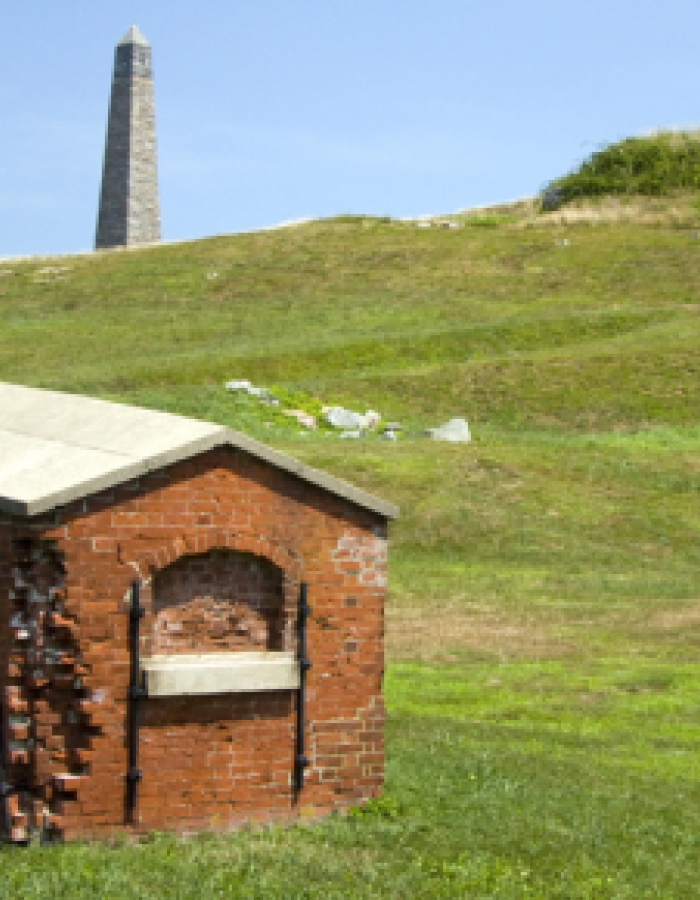
In September 1781, British troops under turncoat Benedict Arnold raided Fort Griswold in Groton and burned New London in the Battle of Groton Heights. Today, the site is a state park that includes the restored earthwork battery, cannons, monuments and memorials.
Rochambeau’s Route
A critical late turning point in the war was the French entry, and nowhere was this more dramatically seen than in the 1781 march of French troops across Connecticut to meet up with General George Washington’s troops for a final steady push south to Yorktown. The Washington-Rochambeau Revolutionary Route in Connecticut is the state’s first National Historic Trail that covers 120 miles throughout the state - the route traveled by French troops in 1781 and 1782.

Revolutionary Lebanon
This small, rural town played an important role in the American Revolution. Today, visitors can visit the Lebanon Historical Society Museum by appointment and explore Connecticut's Revolutionary past and the town's history.

Nathan Hale Homestead
Nathan Hale famously gave up his life to the Revolutionary cause with the words, “I only regret that I have but one life to lose for my country.” His life is commemorated at his Homestead in Coventry and two Nathan Hale Schoolhouses–one in East Haddam and the other in New London.

Webb-Deane-Stevens Museum
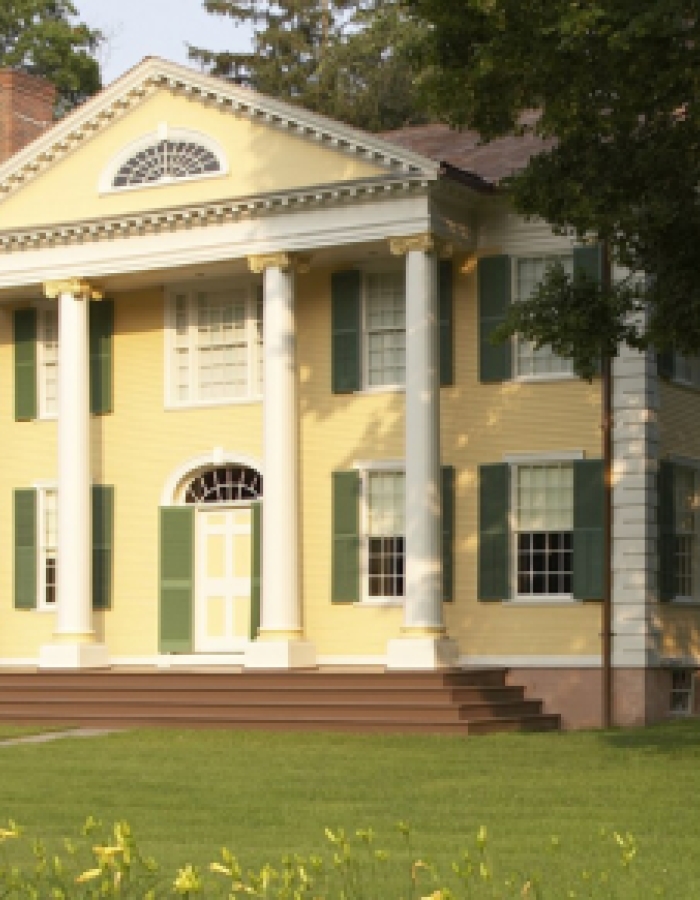
The Webb-Deane-Stevens Museum in historic Old Wethersfield consists of three houses: the Joseph Webb House, George Washington’s headquarters in May 1781; the Silas Deane House, built for America’s Revolutionary War diplomat to France; and the Issac Stevens House, listed on the National Register of Historic Places in Connecticut.

Noah Webster House
The Noah Webster House in West Hartford was home to Noah Webster who came of age in the time of the American Revolution. As a result, he was very involved in shaping public opinion for the cause of independence during this period; his advocacy in the public sphere through the publication of newspaper articles and pamphlets supported the need for American independence and a unique American culture. Webster was the author of "Sketches of American Policy" (published in 1785) which advocated for a strong federal government, a full two years before the Federalist Papers were published. Alexander Hamilton, James Madison and George Washington all had copies of Webster's "Sketches" with many of Webster's ideas ending up in The Constitution in 1789.

Connecticut River Museum
The Essex museum is home to a fully-functional replica of the "Turtle" submarine, the first submarine ever used in combat. David Bushnell from nearby Westbrook was a Yale graduate interested in creating an explosive weapon to use against the British during their occupation of New York Harbor during the Revolutionary War. Bushnell found local artisans who helped him construct an underwater vessel that could secretly transport a “bomb” to an unsuspecting British warship, according to the Connecticut River Museum's website.
Keeler Tavern Museum
On April 27, 1777, British troops marched towards their ships in Westport after they destroyed the supplies stored for General George Washington’s Army in Danbury. On their journey, they battled with 700 patriot fighters at the Battle of Ridgefield, the only inland battle fought in Connecticut. Learn about that day at Keeler Tavern Museum in Ridgefield, where a British cannonball remains lodged in the side of the building.

Old New-Gate Prison & Copper Mine
The historical landmark in East Granby is recognized for being the first chartered copper mine and the first state prison in early America. New-Gate housed "thieves, counterfeiters, and murderers," according to ConnecticutHistory.org, but also Tories (a label given to those sympathetic to the British cause during the Revolutionary War.)
"Connecticut’s Council of Safety feared that the addition of Tories to New-Gate exacerbated an already uneasy situation that existed there," the website notes. "Some historians have theorized that the poor treatment Tories received at New-Gate may have provided a pretext for the ill treatment of American prisoners aboard British prison ships in the waters off New York City later in the war."
Special event: "The Slippery Truth: Prisonbreak at New-Gate" is an immersive, site-specific play by the award-winning Plays in Place theatre company, staged at (and in) the Old New-Gate Prison and Copper Mine. The production runs July 10 to Aug. 30. Don’t miss this complex exploration of the complexities of war, prison, and loyalty at this powerful historic site.

Putnam Memorial State Park
Revolutionary troops camped at Putnam Memorial State Park during the winter of 1778-79. Today, you’ll find reconstructed log buildings and a museum, where display panels tell the story of the war, Connecticut’s role in it and the events that took place during the encampment.

Historical Reenactments For America's 250th
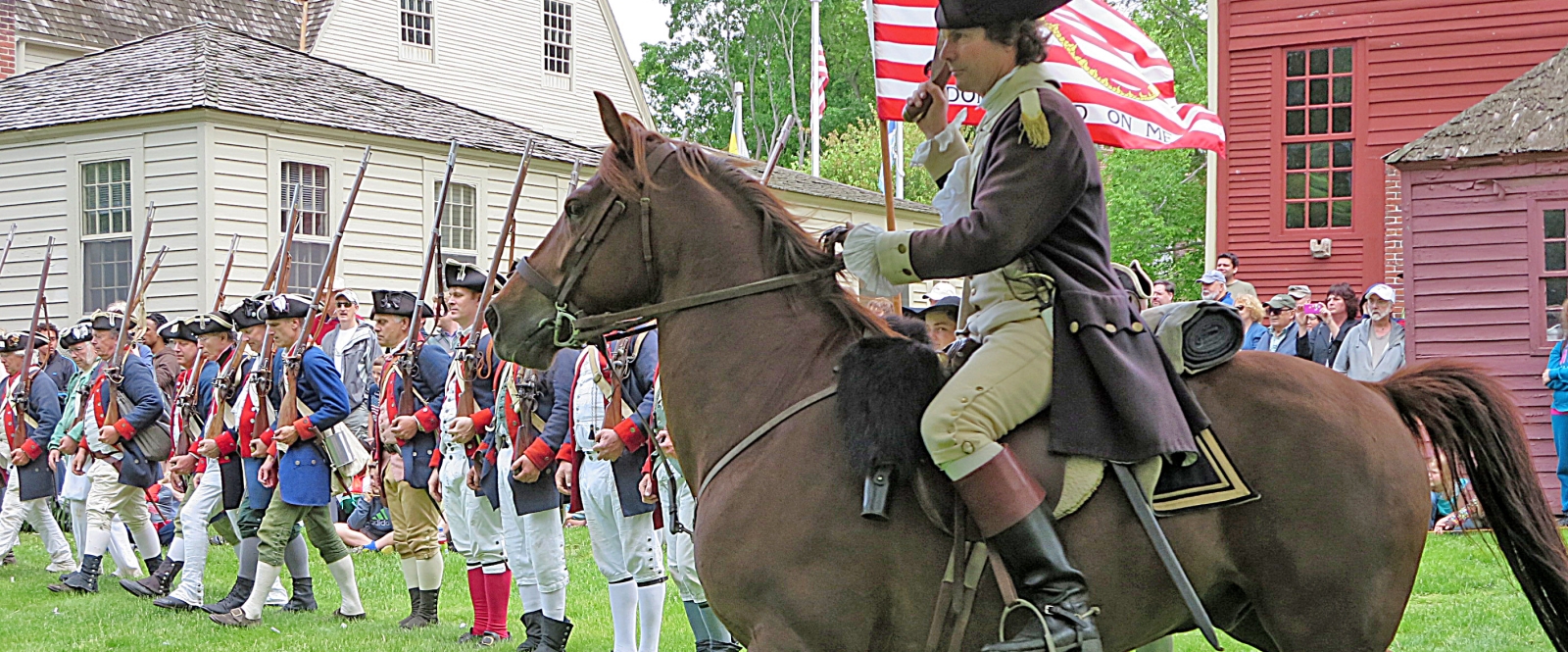
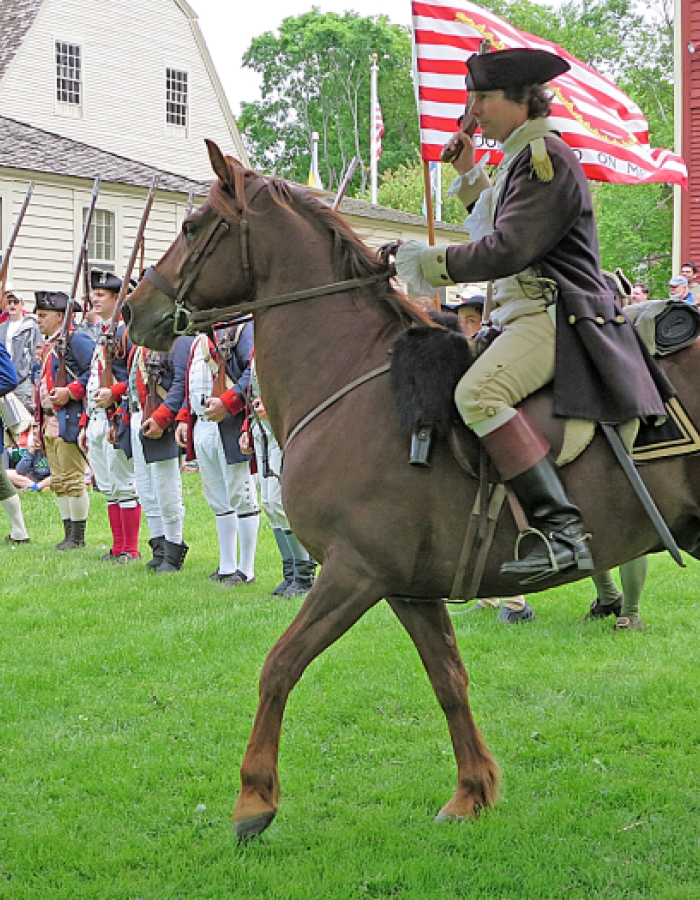
The Revolutionary War era really comes to life with historical reenactments, as role-players in accurate period costumes reconstruct the past with military drills and battle depictions, artillery demonstrations, fife and drum performances, and immersive encampments. Check out these upcoming events:
May 2, Museum of Darien: Celebrate 250 years of Middlesex Parish history with a day of immersive colonial life demonstrations at Museum of Darien. Members of the Fifth Connecticut Regiment, dressed in authentic period attire, will showcase the daily life of a colonial soldier and artisan skills.
May 16, Weston History and Cultural Center: Become a time traveler and experience life at a Revolutionary War encampment with the 5th CT Regiment! Experience soldier drills, a kid’s musket march, blacksmithing, weaving, cooking demonstrations and much more.
May 23, Wethersfield Jubilee: This year, the Webb Deane Stevens Museum's Revolutionary War Encampment joins forces with the Traditional Trades Fair for a full day marking America’s 250th anniversary on the museum grounds. Watch the 5th Connecticut Regiment set up camp with musket demonstrations, a battle skirmish with invading British Marines, open hearth cooking, and a children’s march with wooden muskets. Listen to traditional Colonial music and speak with a camp surgeon about his gruesome profession. Try your hand at centuries-old games like graces, or eavesdrop on military maneuvers.
May 30: Stanley-Whitman House, Farmington: Ye Olde Lebanon Towne Militia, Co. 1775, a dedicated living-history group portraying soldiers and civilians of Connecticut's Third Regiment, sets up camp on the museum's historic grounds for a full afternoon of immersive Revolutionary War interpretation. the encampment fills with military drills, inspections, and demonstrations alongside a wide array of civilian trades: beekeeping, crime and punishment, a surgeon, hands-on musket drill for young recruits, and more.
June 28, Greenwich: Greenwich will host a signature America 250 celebration when the 160-foot Dutch tall ship Oosterschelde sails into Greenwich Harbor and docks at the Delamar Hotel. The ship will be open to the public on Sunday, June 28, before departing for New York City to participate in the international Tall Ships Parade on July 4. Presented by the Greenwich Historical Society, the day will feature a family-friendly celebration at Roger Sherman Baldwin Park featuring free ship boarding and tours, a recreated Colonial Village with costumed Revolutionary-era reenactments, living history encampments, a musical journey through American history, and a Salute to Veterans.
July 18, Deep River Ancient Muster: The Deep River Ancient Muster is a historic annual event, where fife and drum corps gather to perform traditional military-style music. The DRAM is the oldest and largest gathering of fife and drum participants and enthusiasts in the world, and has been referred to as “The Granddaddy of All Musters”, and “A Colonial Woodstock”.
August 21-22, Westbrook Muster: The Westbrook Muster takes place annually on the fourth weekend of August at Ted Lane Field, featuring 40+ invited corps from the U.S. and beyond. The event is free and open to all, with seating, vendors, and food from the Westbrook Boy Scouts.
October 3-4, Pomfret Recreation Park: Pomfret will be hosting a revolutionary war reenactment and living history event, highlighting authentic historic sites. Enjoy reenactments, performances, demonstrations, scholarly lectures and storytelling, dramatic interpretations, and more.

Dine at Revolutionary War-era taverns
The walls of these landmark Connecticut restaurants have witnessed centuries of history. Many served as lodging or watering holes for weary troops during the Revolutionary War, and the stories live on today.
The Griswold Inn in Essex is one of the country's oldest continuously operated inns. It opened in 1776, after the Colony of Connecticut authorized the building of its first warship for the Revolution, the Oliver Cromwell.
According to the inn's website, shipbuilder Uriah Hayden of Essex (then known as “Saybrook”) quickly hired tradesmen and contracted with suppliers to outfit the vessel. Essex suddenly experienced an economic boom as the Haydens housed the shipyard workers, and provided food, spirits and lodging to the suppliers, politicians and other patriots who would visit. Today, the inn features an extensive collection of firearms primarily used during the War of 1812 and/or the Revolutionary War, together with Connecticut weapons made by Samuel Colt and others.
Marlborough Tavern in Marlborough dates back to 1760, and has served as a tavern, hotel, and post office. Known historically as the Colonel Elisha Buell House, the building was a popular stagecoach stop, where militia men celebrated the end of the War, "stacking their muskets in the corner of the taproom," according to the National Register of Historic Places.
Abigail's Grille & Wine Bar in Simsbury has historical roots as Pettibone's Tavern, built in 1780 to serve as the first stagecoach stop outside of Hartford on the Boston to Albany Turnpike, according to its website. The tavern was constructed for Jonathon Pettibone, Jr. during the revolution, the son of a patriot killed in the fighting around New York in 1776.
"The Pettibone Tavern was a meeting place to exchange news of the war, and Captain Phelps of Simsbury used the tavern as a rendezvous with Ethan Allen and his Green Mountain Boys to engineer the bloodless capture of Fort Ticonderoga in the nearby New York colony," Abigail's website notes. "It is highly likely that both of our nation’s first two presidents stayed at The Pettibone Tavern during their travels between Boston, New York and Philadelphia."
Ordinary in New Haven has roots as a tavern and inn that once hosted George Washington. A plaque on the historic building commemorates his June 28, 1775 visit to the Beers Tavern, when he was on his way from Philadelphia to Cambridge to take command of the United Colonies.
Revolutionary Connecticut
Experience America’s roads to independence by car or bicycle in nine specially designed tours at Revolutionary Connecticut. Each tour links Revolutionary sites in a fresh and original way through layered narratives around key figures, such as Ethan Allen and Benedict Arnold.
The CT250 Commission is immensely grateful to our sponsors: Point72, Anonymous, RTX, Stanley Black & Decker, Webster Bank, Dalio Philanthropies, Hartford Steam Boiler, Hartford Healthcare, Laz Parking, Liberty Bank, The Hartford, Travelers, University of Connecticut, Cross Sound Ferry, USA Waste & Recycling, Barnes Group, Connecticut Community Foundation, Connecticut Green Bank, Yale New Haven Health, and Greater Hartford Gives Foundation.
Special Delivery

Connecticut, Delivered Right to Your Fingertips
Share your email address to receive our free newsletter and be the first to see the latest travel deals, attractions and news from CTvisit.com!
Related Articles to Explore

 Article
 Article
 Article
 Article
Article
Article
Article
Article
Article
Article
Article
Article
Article
Article
Article
Article
Article
Article
Article
Article